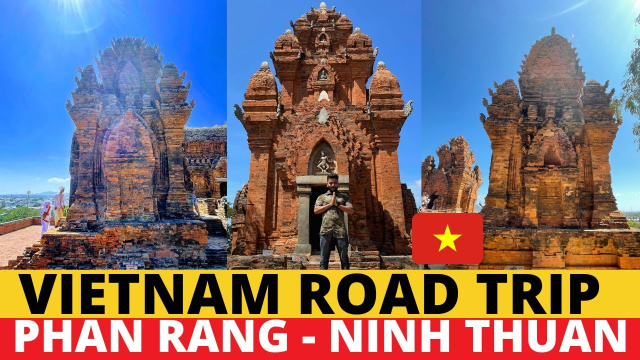
As the spiritual and political capital of the Cham people (the Champa Kingdom), the My Son temple complex consisting of over 70 temples of brick and stone with only few of the remains surviving today, was built between the 4th and 13th centuries and devoted to the God Shiva by the now defunct Kingdom of Champa, which ruled Southern Vietnam for most of the past two centuries. The temple complex was primarily Hindu, and its art and architecture was highly influenced by that of Ancient India. The bricks of the temple towers are held together by a vegetable-based cement. The complex had been completely forgotten after the fall of the Champa Kingdom until it was rediscovered by a Frenchman at the end of the 19th century, and the first studies on the ruins and inscriptions were publicly published in the beginning of the 20th century. The My Son Temple is considered as one of the foremost Hindu temple complexes in Southeast Asia and is the foremost heritage site of this nature in Vietnam. Despite the fact that it can be compared to other grand religious monuments like Angkor Wat in Cambodia or Borobudur in Indonesia, the My Son temple complex is unique and without equal in Southeast Asia, and it has been recognised by UNESCO as a world heritage site as of 1999. Have fun in Vietnam and be safe!